
How to assess compact cars for commuting, parking, highway use, rear-seat needs, cargo, and Canadian winters.
Start with the work the car must do
- How many adults and children ride regularly?
- Which child seats, mobility aids, pets, work items, or sports equipment must fit?
- Is cargo long, tall, fragile, dirty, or weather-sensitive?
- How tight are the garage, driveway, workplace, and normal parking spaces?
- How much of the driving is city, highway, rural, or winter travel?
What this compact car often does well
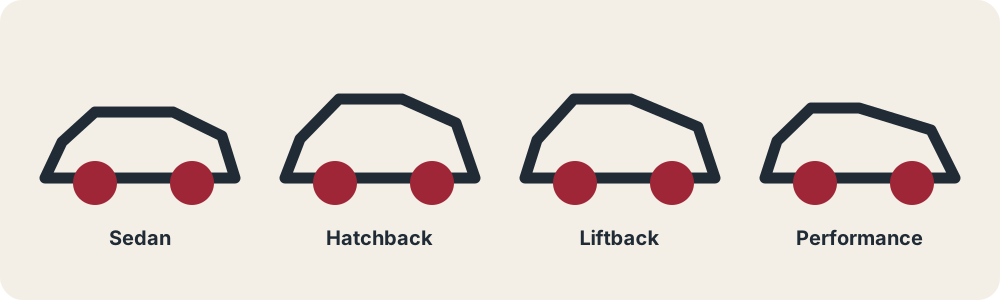
Manageable exterior dimensions with enough cabin and highway ability for regular use. That advantage can disappear if the roofline reduces rear headroom, the trunk opening is narrow, the folded floor is uneven, or the seats do not fit the people who will use them.
Measure access, not only volume
Published litres do not show the full shape of the space. Check opening width and height, wheel-well intrusion, seat-folding steps, cargo-cover location, rear-window slope, and whether luggage still fits with all seats occupied.
Test the exact trim
Sunroofs, batteries, premium audio, spare tires, wheel sizes, seats, and performance hardware can change headroom, cargo space, ride, and winter suitability.